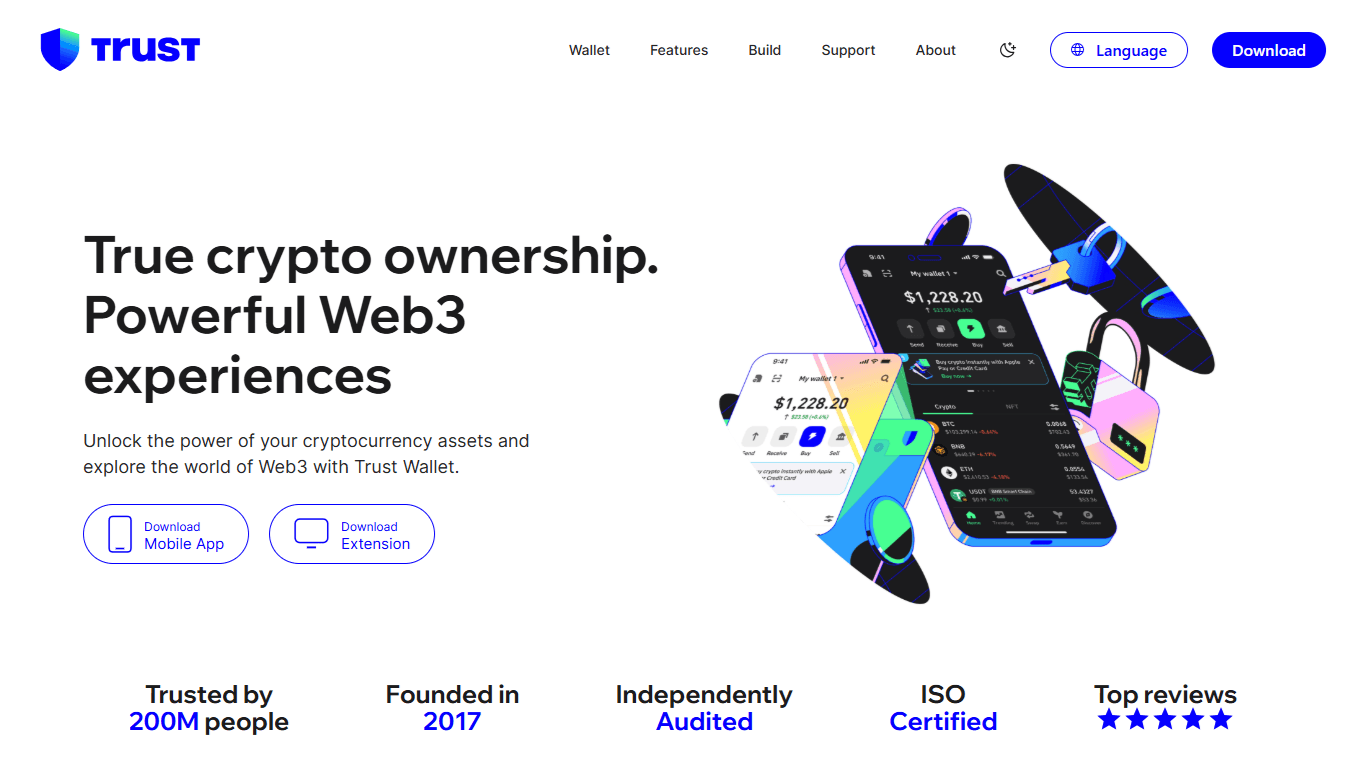
Trust Wallet: A Complete 1200-Word Guide to the Popular Multi-Chain Crypto Wallet
Cryptocurrency has evolved rapidly over the past few years, and with it, the demand for user-friendly yet secure crypto wallets has skyrocketed. Among hundreds of options available today, Trust Wallet stands out as one of the most widely used mobile wallets for beginners and experienced investors alike. Backed initially by Binance and known for its simplicity and multi-chain support, Trust Wallet has become a go-to solution for managing digital assets directly from a smartphone.
This comprehensive 1200-word guide explores everything you need to know about Trust Wallet—what it is, how it works, what features it offers, how to set it up, how to secure it, and why millions of users trust it daily for storing and interacting with crypto.
What Is Trust Wallet?
Trust Wallet is a decentralized, self-custodial mobile cryptocurrency wallet available for both iOS and Android devices. It allows users to store, buy, send, receive, and swap a wide range of digital assets directly from their phones.
Unlike centralized exchanges, Trust Wallet does not hold your private keys. Instead, it generates and stores them locally on your device. This means you—and only you—control your funds.
As a non-custodial wallet, Trust Wallet gives users complete sovereignty over their crypto, making it ideal for anyone who prioritizes ownership, simplicity, and privacy.
Key Benefits of Trust Wallet
Trust Wallet has grown in popularity for several reasons. Here are the major advantages it offers:
Multi-Chain Support
Trust Wallet supports more than 100 blockchains and over 10 million digital assets, including:
Bitcoin (BTC)
Ethereum (ETH) and ERC-20 tokens
Binance Smart Chain (BSC)
Solana (SOL)
Polygon (MATIC)
Avalanche (AVAX)
Tron (TRX)
And countless others
This broad support makes it an all-in-one solution for managing multiple cryptocurrencies in one application.
Full Self-Custody
Trust Wallet does not store user data or hold assets on your behalf.
Your private keys and recovery phrase stay with you, giving you complete control.
Built-In DApp Browser (Android)
The app includes a Web3 browser that lets users interact with:
Decentralized finance platforms (DeFi)
NFT marketplaces
Blockchain games
Staking services
Decentralized exchanges (DEXs)
iOS users can still connect to dApps using WalletConnect.
Built-In Crypto Purchase Options
Trust Wallet partners with third-party providers to allow users to buy crypto with:
Debit cards
Credit cards
Bank transfers
Local payment methods (depending on country)
This simplifies onboarding for new users.
Staking and Earning Features
Supported assets such as:
BNB
Solana
Cosmos (ATOM)
Tron
Tezos
can be staked directly in the wallet to earn passive rewards.
User-Friendly Interface
Even beginners with no crypto experience find Trust Wallet easy to use thanks to its clean design and simple navigation.
How Trust Wallet Works
Trust Wallet uses the principles of decentralized finance and cryptographic security. Understanding how it works helps users appreciate its benefits:
Private Keys Stay on Your Device
The wallet generates a unique private key and recovery phrase during setup.
These never leave your device, which significantly reduces hacking risks.
Hierarchical Deterministic (HD) Wallet
Trust Wallet uses HD wallet architecture, meaning:
One recovery phrase can generate multiple wallets
You can manage various cryptocurrencies with one seed phrase
Blockchain Interaction
Trust Wallet doesn’t store coins—blockchains do.
The wallet simply acts as a gateway that securely interacts with different networks on your behalf.
Open-Source Components
Much of Trust Wallet’s code is open source, allowing developers to audit and verify its security model.
How to Set Up Trust Wallet
Setting up Trust Wallet is fast and beginner-friendly. Here's a full walkthrough:
Step 1: Download the App
Search for “Trust Wallet” in the Apple App Store or Google Play Store.
Ensure you're downloading the official version to avoid phishing apps.
Step 2: Create a New Wallet
When you open Trust Wallet for the first time, you will be offered:
Create a new wallet, or
Import an existing wallet
Select Create New Wallet.
Step 3: Back Up Your Recovery Phrase
You’ll be given a 12-word recovery phrase that acts as the master key to your wallet.
Important rules:
Write it down on paper
Never store it digitally or take screenshots
Never share it online
Anyone with these 12 words can access your wallet.
Step 4: Confirm Your Recovery Phrase
The app will ask you to re-enter the words in the correct order to verify that you wrote them down correctly.
Once verified, your wallet will be created.
Step 5: Add Crypto Assets
Trust Wallet automatically shows some popular coins, but you can add others by:
Tapping the + icon
Searching for the token
Turning on its toggle
You’re now ready to receive, send, and manage crypto.
How to Use Trust Wallet
Once your wallet is set up, you can begin using its many features.
Receiving Crypto
To receive funds:
Select the token you want to receive
Tap Receive
Copy your wallet address
Share it only with trusted sources
Always ensure the asset matches the correct blockchain (e.g., ERC-20 vs BEP-20).
Sending Crypto
To send funds:
Choose the token
Tap Send
Enter the recipient address
Choose network fees (if applicable)
Confirm the transaction
Blockchain fees vary based on network congestion.
Swapping Tokens
Trust Wallet allows in-app swapping using decentralized liquidity pools.
Users can exchange tokens without relying on exchanges like Binance or Coinbase.
Available swap options generally include:
BSC swaps
Ethereum swaps
Other EVM-compliant networks
Fees typically include network gas fees + liquidity provider fees.
Staking for Passive Income
Trust Wallet supports staking for several major networks.
To stake:
Select the asset (e.g., ADA, BNB, ATOM)
Tap Stake
Choose a validator
Start earning rewards
Staking helps secure the blockchain while rewarding participants.
Using the Built-In DApp Browser
The DApp browser gives access to:
PancakeSwap
Uniswap
OpenSea (via WalletConnect)
Aave
Compound
Blockchain games
NFT tools
Android users access it directly; iOS users rely on WalletConnect.
Security Features of Trust Wallet
Trust Wallet includes multiple layers of security:
● Local private key storage
Keys never leave your phone.
● Biometric authentication
Fingerprint or face unlock can protect the app.
● Encrypted keystore files
Wallet encryption protects against unauthorized access.
● Recovery phrase backup
This is the ultimate fallback for restoring the wallet.
● Non-custodial design
No central servers hold your keys or assets.
Best Practices for Using Trust Wallet Safely
Security ultimately depends on user behavior. Follow these guidelines:
Never share your 12-word phrase
Don’t store it in email, notes, or cloud storage
Use a strong device password
Avoid downloading unverified apps
Only interact with trusted DApps
Beware of phishing links
Double-check token contract addresses before adding custom tokens
Good security habits are essential to protecting your crypto.
Common Problems and Solutions
Even reliable wallets face occasional issues. Here are typical problems and fixes:
Missing Tokens
Tokens may not appear automatically—enable them manually or add custom contract addresses.
High Network Fees
Ethereum transactions can be expensive during congestion; consider using BSC or Polygon networks.
Failed Swaps
Often caused by low slippage settings or insufficient gas fees.
Transaction Pending Too Long
Increase gas fees or cancel the transaction (if supported by the network).
Final Thoughts
Trust Wallet remains one of the most accessible, powerful, and versatile crypto wallets for managing digital assets on mobile devices. With its multi-chain support, decentralized architecture, DApp integration, staking features, and intuitive interface, it offers everything users need to interact with the crypto ecosystem securely.
Whether you’re a beginner receiving your first token or a seasoned investor managing multiple networks, Trust Wallet provides the flexibility, control, and privacy needed for long-term crypto success.