Trust Wallet: A Comprehensive 1200-Word Guide to the Leading Mobile Crypto Wallet
As cryptocurrency adoption grows, the need for easy, secure, and accessible tools for managing digital assets becomes increasingly important. Trust Wallet has emerged as one of the most widely used mobile wallets because it strikes a balance between powerful functionality and user-friendly design. Known for supporting a massive number of blockchains and giving users full control over their private keys, Trust Wallet has become a favorite among both beginners and seasoned crypto holders.
This detailed guide explains what Trust Wallet is, how it works, its core features, supported networks, security mechanisms, setup instructions, best practices, and everything you need to know before using it as your primary crypto wallet.
What Is Trust Wallet?
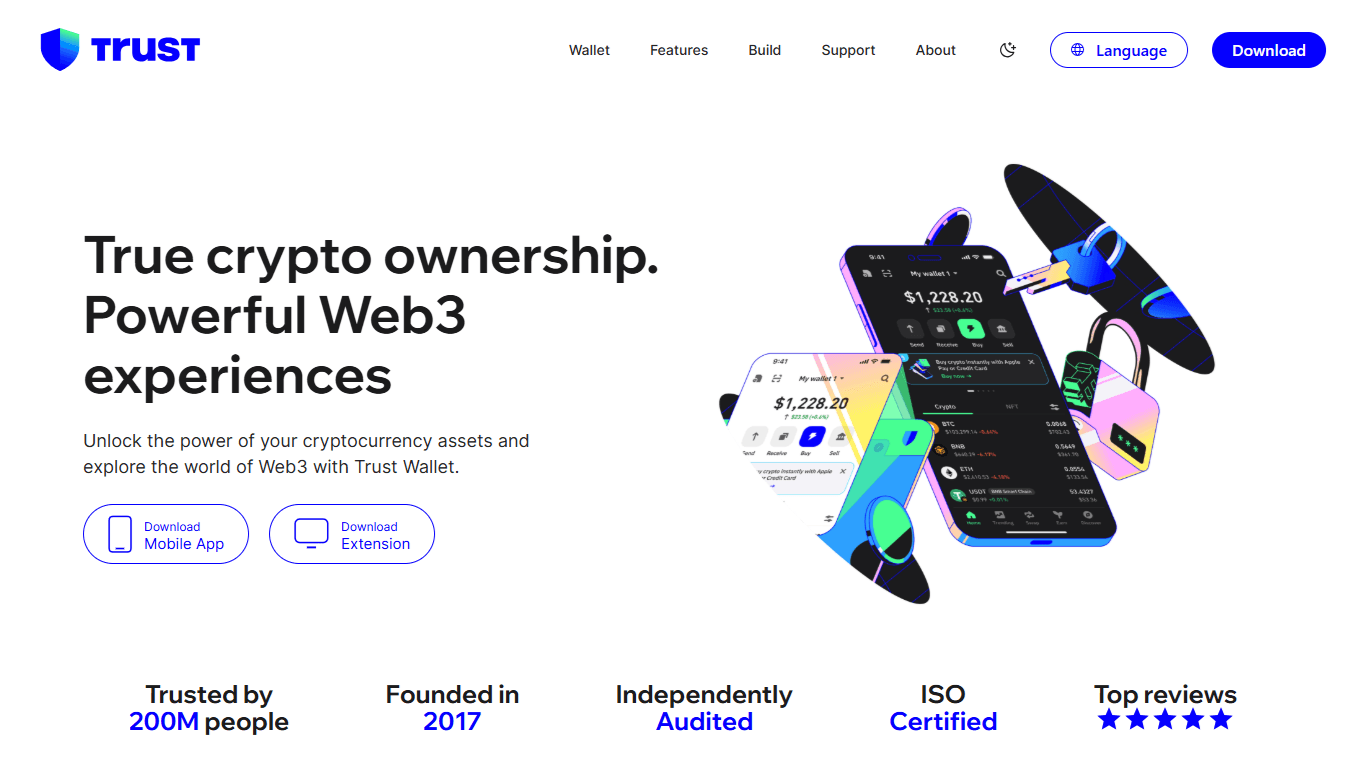
Trust Wallet is a decentralized, self-custodial mobile cryptocurrency wallet available for iOS and Android devices. It allows users to store, send, receive, exchange, and interact with digital assets across hundreds of blockchains.
Unlike centralized platforms, Trust Wallet does not hold users’ private keys or recovery phrases. All sensitive data is stored locally on the user’s device, which means:
You own your crypto
You control your private keys
No one can lock or freeze your funds
Trust Wallet is designed to function as a gateway into the world of Web3, DeFi, NFTs, and crypto trading—all from a mobile device.
Why Trust Wallet Is Popular
Trust Wallet has earned its reputation for several reasons. Here’s why millions choose it:
1. Wide Blockchain Support
Trust Wallet supports more than 100 blockchains and millions of tokens. This includes:
Bitcoin
Ethereum and ERC-20 tokens
Binance Smart Chain (BEP-20)
Solana
Polygon
Tron
Avalanche
Cosmos ecosystem coins
TON, Near, and more
Few wallets offer such extensive compatibility.
2. True Decentralization
Your keys never leave your phone. There are no accounts to create, no ID verification, and no central authority.
3. Built-In Web3 Browser
Trust Wallet includes an in-app decentralized application (dApp) browser on Android. iOS users can still connect easily with WalletConnect.
4. Integrated Buying and Swapping Tools
The wallet connects with third-party providers that allow users to buy crypto with fiat and swap tokens using decentralized liquidity sources.
5. Simple, Modern Interface
Trust Wallet is designed to be intuitive even for crypto newcomers, with clear menus, smooth navigation, and simple wallet setup.
Core Features of Trust Wallet
Trust Wallet is packed with features that give users complete control of their crypto journey. Here are the major ones:
1. Multi-Coin Storage
Trust Wallet allows you to store a broad range of digital assets. Whether it’s Bitcoin, Ethereum NFTs, or new DeFi tokens, the app can track, manage, and send them all from one place.
2. Sending and Receiving Crypto
Trust Wallet makes transactions simple.
To receive crypto:
Choose a coin
Tap Receive
Copy your wallet address
Share it with the sender
To send crypto:
Select the asset
Tap Send
Enter the address + amount
Adjust gas fees (if applicable)
Confirm
Transaction times depend on network activity.
3. Built-In Swap and Exchange Functionality
Users can swap between supported tokens within the app. Swaps use decentralized exchange mechanisms (like DEX liquidity pools) to complete conversions without requiring centralized accounts.
4. Staking and Earning Options
Trust Wallet supports staking for certain networks. You can stake coins like:
BNB
ATOM
TRX
SOL
Tezos
Others
Staking helps you earn rewards while helping secure the blockchain.
5. Web3 dApp Browser
Trust Wallet lets you connect directly to decentralized applications. From DeFi platforms to NFT marketplaces and blockchain games, the Web3 browser brings the entire decentralized internet to your smartphone.
Android users access dApps directly within the app, while iOS users rely on WalletConnect to authorize connections safely.
6. NFT Management
Trust Wallet includes NFT support for Ethereum, BNB Chain, Polygon, and other networks. You can:
View your NFTs
Send or receive them
Connect to NFT marketplaces
Use blockchain games
This makes Trust Wallet a great solution for anyone involved in Web3 collectibles.
How Trust Wallet Works
Trust Wallet follows a decentralized approach to wallet architecture. Understanding how it works helps users use it more confidently.
1. Private Key Generation
When you create a new wallet, Trust Wallet generates a 12-word recovery phrase.
The phrase is a human-readable version of your private key.
2. Local Storage
Your private keys and recovery phrase are stored only on your device.
Nothing is uploaded to cloud storage or company servers.
3. Blockchain Interaction
Your crypto doesn’t actually live inside the app. All coins remain on their respective blockchains. Trust Wallet simply interacts with these networks to:
Broadcast transactions
Display balances
Track activity
4. HD Wallet Structure
One recovery phrase controls multiple blockchain addresses.
This makes it easy to restore your wallet without managing many separate keys.
Setting Up Trust Wallet: Step-by-Step Guide
Here is a complete walkthrough for new users:
Step 1: Download the App
Find the official Trust Wallet app in the Apple App Store or Google Play Store.
Be cautious of fake or look-alike apps.
Step 2: Create a New Wallet
Open the app and choose Create New Wallet.
Trust Wallet will generate your 12-word backup phrase.
Step 3: Write Down Your Recovery Phrase
This is the most important step.
Write the phrase on paper
Store it safely
Never share it
Never save it online
Anyone with the phrase can restore your wallet.
Step 4: Confirm the Phrase
To ensure accuracy, Trust Wallet will ask you to re-enter the words in the correct order.
Step 5: Add Crypto Tokens
Tap the + icon to enable specific tokens on the home screen.
You can browse supported coins or add custom tokens manually via contract addresses.
Security Features of Trust Wallet
Security is a top priority. Key features include:
• Biometric Authentication
Fingerprint or Face ID can be used to protect access to the app.
• Local Encryption
Private keys and sensitive data are stored securely on your device.
• Manual Backup System
The wallet never stores your seed phrase—only you have it.
• Non-Custodial Design
There are no centralized servers to hack or shut down.
• Anonymous Use
No personal information is required to create or use the wallet.
Common Problems and Their Solutions
Trust Wallet is easy to use, but some issues may occur. Here are frequent problems and how to fix them:
1. Tokens Not Showing Up
You may need to manually enable the token or add its contract address.
2. Swap Failures
Swaps can fail due to:
Low gas fees
High slippage requirements
Insufficient liquidity
Increasing gas or slippage often solves the issue.
3. Transaction Pending
Transactions may get stuck during network congestion.
You can:
Increase gas fees
Cancel/retry (if supported)
Wait for network activity to drop
4. Wallet Not Connecting to dApps
If using iOS, use WalletConnect instead of the built-in browser.
Best Practices for Using Trust Wallet Safely
Proper security habits are essential:
Never screenshot your recovery phrase
Never enter your seed phrase into websites
Avoid suspicious airdrops and links
Double-check token networks before sending
Enable biometric lock
Use hardware wallets for large amounts
Trust Wallet is secure, but user error is the biggest risk.
Conclusion
Trust Wallet is a powerful, flexible, and intuitive mobile wallet that supports a massive range of digital assets while keeping users in full control of their keys. With features like staking, token swaps, NFT management, and DApp interaction, it provides everything needed to explore the decentralized ecosystem directly from a smartphone.
Whether you're new to cryptocurrency or deeply involved in DeFi and NFTs, Trust Wallet offers an all-in-one solution that combines convenience, security, and versatility.